 Skip to main content
How Often Should a Commercial Kitchen Be Deep Cleaned? A Schedule for Restaurants & Hotels
Quick answer: Commercial kitchens should follow a tiered cleaning schedule: daily cleaning of surfaces and equipment, weekly degreasing and floor scrubbing, monthly deep cleaning of storage and hard-to-reach areas, and quarterly full-facility deep cleans covering exhaust systems, grease traps, and ceiling/wall surfaces. High-volume kitchens may need more frequent cycles.
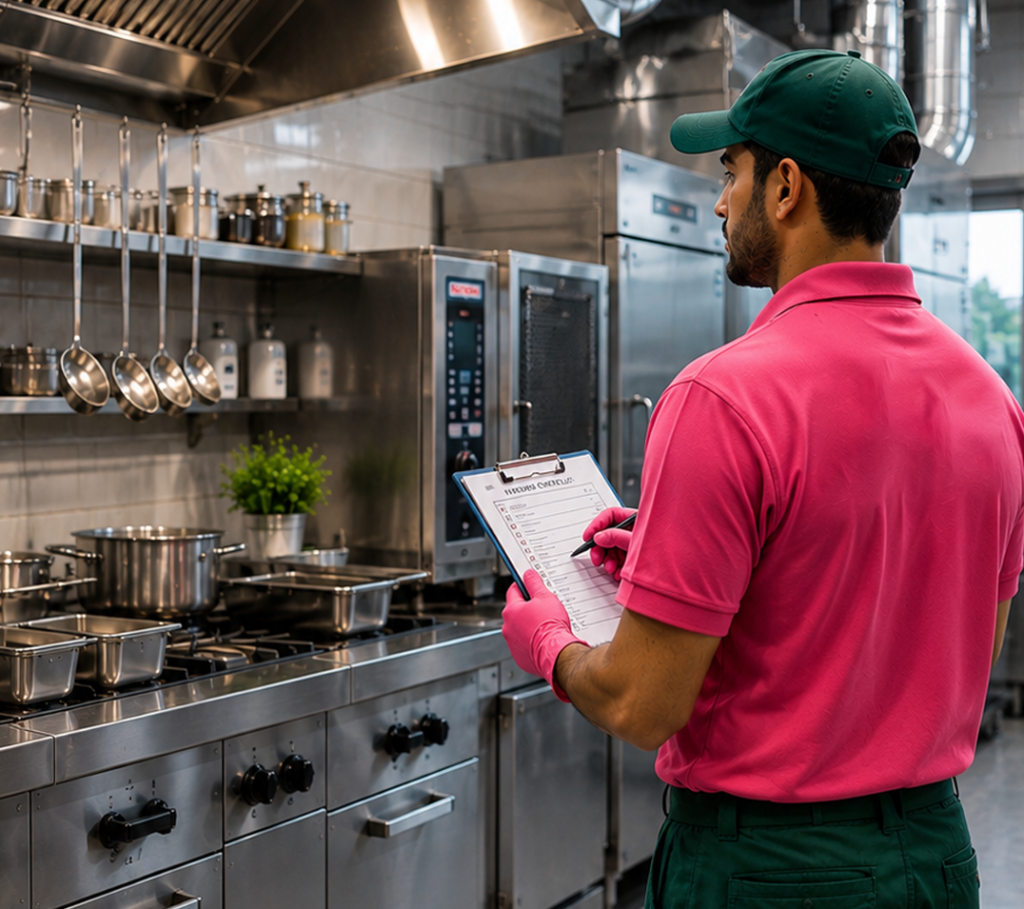
“How often should we deep clean the kitchen?” is a question most restaurant and hotel operators answer reactively — cleaning happens before an inspection, after a complaint, or when something visibly goes wrong. But commercial kitchens generate grease, food residue, and bacterial risk continuously, and a structured schedule is what actually keeps a kitchen consistently safe and compliant, rather than just occasionally presentable.
This guide breaks down a realistic deep cleaning schedule for commercial kitchens, based on task type and risk level.
Why a Fixed Schedule Matters More Than Reactive Cleaning
Kitchens that clean only when something looks dirty tend to miss the areas that matter most for safety and compliance:
- Grease accumulates invisibly in exhaust systems, ductwork, and behind equipment long before it’s visible on a countertop.
- Bacterial risk builds gradually in cutting boards, storage areas, and refrigeration units, regardless of how clean surfaces look.
- Fire risk increases with grease buildup in exhaust hoods and ducts — a leading cause of commercial kitchen fires.
- Inspectors check maintenance history, not just current appearance — a documented, scheduled cleaning program demonstrates consistent compliance in a way a pre-inspection scramble cannot.
Commercial Kitchen Deep Cleaning Schedule
Daily
- Wipe down and sanitize all food prep surfaces before and after use
- Clean cooking equipment surfaces (stovetops, grills, fryers)
- Sweep and mop floors, including under easily movable equipment
- Empty and clean waste bins
- Sanitize cutting boards and food-contact utensils between uses
Weekly
- Degrease stovetops, grills, and fryer surroundings thoroughly
- Clean and sanitize refrigeration unit interiors
- Deep clean floor drains
- Wipe down walls near cooking stations where grease splatter accumulates
- Clean exterior of major equipment (ovens, dishwashers, prep stations)
Monthly
- Deep clean storage shelving and containers (not just restocking)
- Clean behind and underneath heavy equipment
- Sanitize ice machines and beverage dispensing equipment
- Deep clean walk-in cooler/freezer interiors, including shelving and door seals
- Inspect and clean pest-prone areas (storage corners, equipment gaps)
Quarterly
- Full exhaust hood and ductwork cleaning
- Grease trap cleaning and inspection
- Ceiling, wall, and overhead light fixture deep clean
- Full-facility degreasing, including hard-to-reach areas behind and above equipment
- Comprehensive pest control treatment
Adjusting Frequency Based on Kitchen Type
| Kitchen Type | Exhaust/Grease Trap Cleaning | Storage Deep Clean | Full Facility Deep Clean |
|---|---|---|---|
| High-volume restaurant (multiple daily services) | Monthly | Bi-weekly | Quarterly |
| Standard restaurant/cafe | Quarterly | Monthly | Quarterly |
| Hotel banquet/event kitchen | Based on event frequency | Monthly | Quarterly |
| Cloud kitchen/high-turnover delivery | Monthly | Bi-weekly | Quarterly |
Kitchens running high-oil cooking methods (fried food, tandoor, high-volume grilling) generally need more frequent exhaust and grease trap cleaning than the standard quarterly baseline, regardless of overall kitchen size.
Warning Signs You’re Overdue for a Deep Clean
- Persistent grease odor even after daily cleaning
- Visible grease buildup on exhaust hood exterior
- Slow-draining floor drains
- Pest sightings, even occasional ones
- Mold or mildew smell near refrigeration units
- Staff reporting slippery floors near cooking stations
Frequently Asked Questions
How long does a full commercial kitchen deep clean take? For a standard restaurant kitchen, a full quarterly deep clean (exhaust, grease trap, ceiling/wall, full degreasing) typically takes 1–2 days depending on kitchen size and grease buildup severity.
Can deep cleaning happen without closing the kitchen? Daily and weekly tasks integrate into normal operations, but quarterly deep cleans involving exhaust systems and grease traps usually require scheduling during off-hours or a brief closure window to allow full access and drying time.
Is quarterly exhaust cleaning enough, or does it depend on cooking volume? It depends on volume and cooking method — high-oil, high-frequency cooking (frying, grilling) typically needs monthly exhaust and grease trap cleaning rather than quarterly, since grease accumulates faster.
What’s the biggest mistake restaurants make with cleaning schedules? Treating deep cleaning as a pre-inspection task rather than a scheduled operational routine — this leads to exactly the storage, grease, and pest issues that inspectors most commonly cite.
Building a Schedule That Actually Gets Followed
A cleaning schedule only works if it’s documented, assigned, and tracked — not left to informal judgment during busy shifts. Pairing daily/weekly in-house tasks with professional monthly and quarterly deep cleans is the most reliable way most restaurants and hotels maintain consistent compliance without disrupting service.
Pinkclean provides commercial kitchen deep cleaning for restaurants and hotels, including exhaust and grease trap cleaning, storage sanitization, and full-facility degreasing — scheduled around your service hours to keep your kitchen consistently compliant and audit-ready.
Need a deep cleaning schedule built around your kitchen’s actual volume? Contact Pinkclean for a customized cleaning plan.
