 Skip to main content
Machinery & Equipment Area Cleaning: How to Clean Around Production Lines Without Downtime
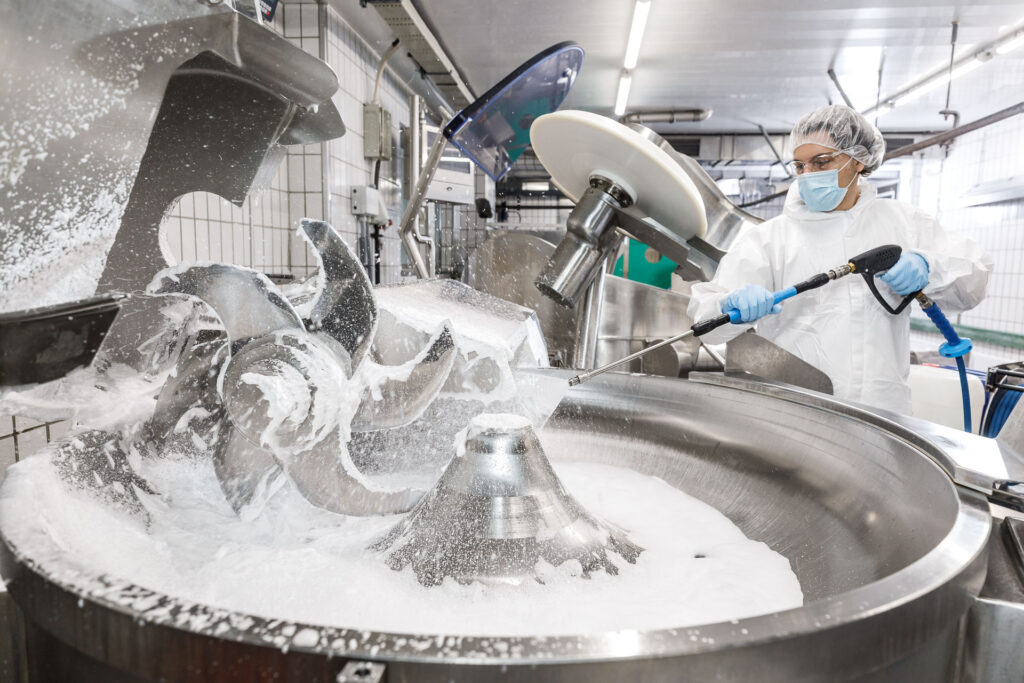
For most factories, the biggest objection to deep cleaning isn’t cost — it’s disruption. Stopping a production line, even for a few hours, has a real cost attached to it, and plant managers are understandably reluctant to schedule cleaning that eats into output. But machinery and equipment areas are also some of the most critical zones to keep clean: dust, oil residue, and debris buildup near production lines directly affect equipment performance, safety, and product quality.
The good news is that cleaning around active machinery doesn’t have to mean stopping it. This guide covers how to approach machinery-area cleaning safely and effectively — without bringing production to a halt.
Why Machinery Area Cleaning Gets Skipped
In most facilities, general floor and common-area cleaning happens on a routine schedule, but the areas directly around machinery and production lines are treated differently — often cleaned only during planned maintenance shutdowns or ignored between them. This happens for a few reasons:
- Safety concerns — cleaning near moving parts or live equipment carries real risk if not done correctly.
- Access restrictions — production zones are often off-limits to general housekeeping staff.
- Scheduling conflicts — plant managers don’t want to interrupt shifts for cleaning that isn’t urgent-looking.
The result is that machinery areas accumulate dust, oil film, and debris for months at a time, which creates exactly the problems this cleaning was meant to prevent.
The Real Cost of Neglecting Machinery Area Cleaning
- Increased equipment wear — dust and debris in moving parts accelerate mechanical wear and can shorten equipment lifespan.
- Overheating risk — dust buildup on motors, control panels, and ventilation points can trap heat and increase failure risk.
- Quality issues — in precision manufacturing, electronics, or food processing, contamination from surrounding dust or residue can directly affect product quality.
- Safety hazards — oil films and debris near machinery are common causes of slips and falls on factory floors.
- Failed audits — machinery-area housekeeping is a standard checkpoint in ISO and client facility audits; visibly neglected equipment zones are an easy point of failure.
How to Clean Around Active Production Lines Safely
1. Schedule Around Natural Production Gaps
Most facilities have predictable low-activity windows — shift changes, planned short breaks, or lower-output periods. Structuring machinery-area cleaning around these windows, rather than demanding a full stop, is often enough to cover most of the work without touching output targets.
2. Use a Zone-by-Zone Approach
Instead of attempting to clean an entire production line at once, professional cleaning teams work section by section — cleaning around Machine A while Machine B continues running, then moving on. This keeps the overall line operational even while individual sections are serviced.
3. Train Cleaning Staff on Equipment-Specific Protocols
Cleaning near live machinery requires staff who understand lockout/tagout basics, safe distances from moving parts, and which surfaces can be cleaned while equipment is running versus which require it to be powered down. This is a key difference between general housekeeping staff and teams trained specifically for industrial/machinery-area cleaning.
4. Use the Right Equipment for the Job
- Industrial vacuums with HEPA filtration for dust removal near sensitive equipment, without scattering particles into the air.
- Non-abrasive degreasers safe for use near machinery surfaces, avoiding chemicals that could damage components or leave residue.
- Compressed air tools (used carefully) for clearing dust from control panels and hard-to-reach machine surfaces.
- Microfiber and lint-free cloths for wiping down equipment without leaving fibers that could interfere with sensitive machinery.
5. Coordinate with Maintenance Teams
The most effective machinery-area cleaning programs run in coordination with maintenance schedules — cleaning teams flag visible wear, leaks, or damage they notice while working, feeding useful information back to maintenance without duplicating effort.
6. Plan Deeper Cleans Around Scheduled Downtime
While routine dusting and surface cleaning can happen around active production, deeper cleaning — internal panel cleaning, under-machine floor cleaning, full degreasing — is best scheduled during planned maintenance shutdowns, when equipment is already powered down for other reasons. This avoids creating a separate disruption purely for cleaning.
A Sample Machinery Area Cleaning Approach
| Task | Frequency | Can Be Done Without Stopping Production? |
|---|---|---|
| Dust removal from external surfaces | Daily/Weekly | Yes, with trained staff |
| Control panel exterior wiping | Weekly | Yes, with caution |
| Floor cleaning around machine base | Weekly | Yes, zone-by-zone |
| Degreasing of surrounding floor | Monthly | Mostly yes, during low-activity windows |
| Internal panel/vent cleaning | Aligned with maintenance shutdown | No — requires power-down |
| Full under-machine deep clean | Aligned with maintenance shutdown | No — requires power-down |
Why This Requires a Specialized Team, Not General Housekeeping
General housekeeping staff are typically not trained to work safely around active machinery, nor equipped with the right tools for equipment-safe cleaning. Bringing in an industrial cleaning partner with specific machinery-area experience reduces risk — both to workers and to the equipment itself — while ensuring the cleaning actually gets done regularly, instead of being pushed indefinitely to “the next shutdown.”
Pinkclean provides ISO-certified industrial cleaning services with teams trained for machinery and equipment-area cleaning, structured around your production schedule rather than against it — minimizing disruption while keeping critical zones consistently clean and audit-ready.
Need a machinery-area cleaning plan that works around your production schedule? Get in touch with Pinkclean to discuss a customized approach.
