 Skip to main content
Clean Room Cleaning Best Practices for Pharmaceutical and Medical Device Manufacturing
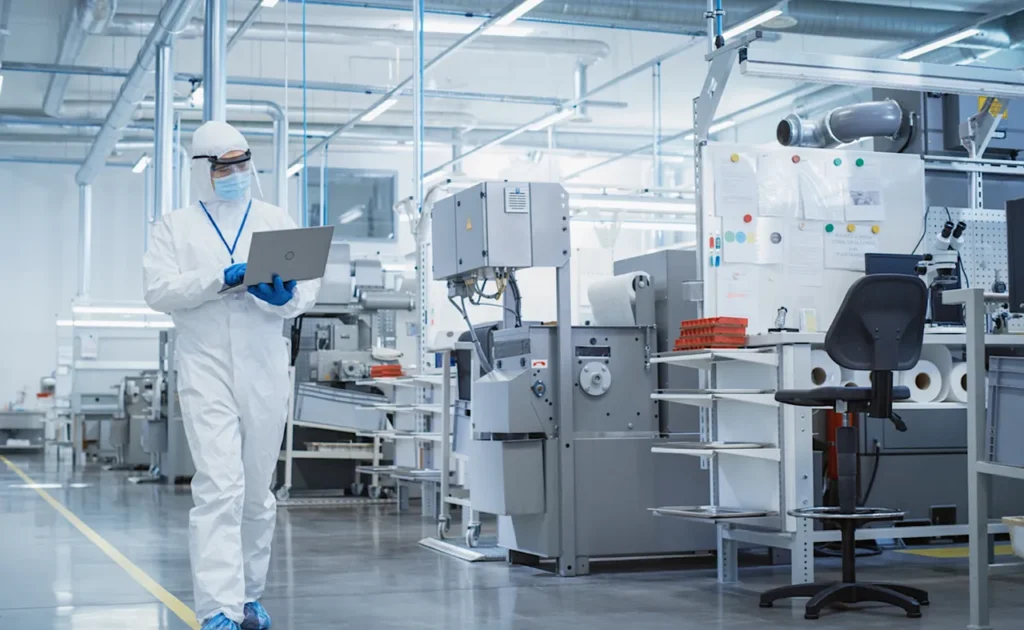
In pharmaceutical and medical device manufacturing, cleanliness is directly linked to product quality, patient safety, and regulatory compliance. Even microscopic particles, bacteria, or chemical residues can compromise sterile environments, resulting in product recalls, failed audits, or production downtime.
This is why implementing clean room cleaning best practices is essential. A structured cleaning program not only maintains contamination control but also supports compliance with ISO 14644, Good Manufacturing Practices (GMP), and other industry regulations.
At Pinkclean, we provide professional clean room cleaning services for pharmaceutical, biotechnology, medical device, and healthcare manufacturing facilities across Bangalore, Mangalore, Karnataka, and India.
Why Clean Room Cleaning Is Critical
Unlike conventional industrial spaces, clean rooms require strict environmental control. Every cleaning activity must minimize particle generation and prevent cross-contamination.
Effective clean room cleaning helps:
- Maintain sterile manufacturing conditions
- Protect product integrity
- Reduce contamination risks
- Ensure regulatory compliance
- Improve employee safety
- Increase production reliability
Without proper cleaning, contaminants can quickly accumulate on floors, equipment, walls, ceilings, and air handling systems.
Best Practice 1: Follow a Documented Cleaning Schedule
A clean room should never be cleaned on an ad hoc basis.
Develop a cleaning schedule that includes:
- Daily cleaning of production areas
- Weekly deep cleaning
- Monthly high-level cleaning
- Quarterly preventive maintenance cleaning
- Emergency cleaning procedures after spills or contamination incidents
A documented schedule ensures consistency and audit readiness.
Best Practice 2: Use Clean Room-Compatible Cleaning Equipment
Standard cleaning tools can introduce fibres and contaminants into controlled environments.
Instead, use:
- HEPA-filtered vacuum cleaners
- Low-lint microfiber wipes
- Non-shedding mops
- Anti-static cleaning tools
- Stainless steel cleaning equipment
- Dedicated clean room carts
Using the correct equipment reduces the risk of particle generation during cleaning.
Best Practice 3: Select Approved Cleaning Chemicals
Cleaning agents should be compatible with clean room surfaces and manufacturing processes.
Commonly used solutions include:
- IPA (Isopropyl Alcohol)
- Sterile disinfectants
- Neutral pH detergents
- Hydrogen peroxide-based disinfectants
- Low-residue cleaning agents
Always rotate disinfectants where required to prevent microbial resistance.
Best Practice 4: Clean from Top to Bottom
Always clean in a systematic order:
- Ceilings
- Light fixtures
- Walls
- Windows
- Equipment surfaces
- Workstations
- Floors
This prevents contaminants from settling on already cleaned surfaces.
Best Practice 5: Control Human Contamination
Personnel are one of the largest sources of clean room contamination.
Best practices include:
- Proper gowning procedures
- Hair and beard covers
- Shoe covers
- Gloves and masks
- Hand sanitization before entry
- Controlled movement within clean rooms
Training employees on contamination control is just as important as cleaning the facility.
Best Practice 6: Focus on High-Touch Surfaces
Frequently touched areas should receive additional attention, including:
- Door handles
- Control panels
- Touchscreens
- Equipment buttons
- Worktables
- Pass boxes
- Airlock doors
Regular disinfection reduces microbial contamination.
Best Practice 7: Maintain Air Handling Systems
Clean rooms rely heavily on controlled airflow.
Routine maintenance should include:
- HEPA filter inspections
- Air duct cleaning
- Return air grille cleaning
- Vent cleaning
- Air pressure monitoring
Maintaining air systems helps preserve ISO cleanliness levels.
Best Practice 8: Schedule Periodic Deep Cleaning
Routine maintenance alone is not enough.
Periodic deep cleaning removes contaminants from:
- Ceiling voids
- Structural beams
- Utility piping
- Cable trays
- Equipment undersides
- Storage racks
- Difficult-to-access areas
Deep cleaning significantly improves long-term contamination control.
Common Mistakes to Avoid
Avoid these practices in controlled environments:
- Using household cleaning products
- Dry sweeping floors
- Reusing contaminated wipes
- Mixing incompatible chemicals
- Ignoring overhead dust
- Cleaning without proper documentation
- Using damaged cleaning tools
These mistakes can compromise the integrity of a clean room.
Why Choose Pinkclean?
Pinkclean provides specialized clean room cleaning services tailored to regulated industries.
Our expertise includes:
- ISO-certified cleaning procedures
- Trained clean room specialists
- HEPA filtration equipment
- Clean room-compatible chemicals
- GMP-compliant cleaning practices
- Industrial-grade cleaning technology
- Flexible cleaning schedules
- Detailed quality inspections
We help manufacturers maintain clean, compliant, and efficient production environments.
Conclusion
Clean room cleaning is a critical component of pharmaceutical and medical device manufacturing. Following industry best practices helps reduce contamination risks, protect product quality, and maintain compliance with international standards.
Whether you require routine maintenance or comprehensive deep cleaning, Pinkclean delivers professional clean room cleaning services designed to meet the highest industry expectations.
Partner with Pinkclean to keep your clean room operating at peak performance while ensuring safety, quality, and compliance.
FAQs
1. What are clean room cleaning best practices?
They include following a documented cleaning schedule, using clean room-compatible equipment and chemicals, cleaning from top to bottom, controlling personnel contamination, and performing regular deep cleaning.
2. Why is clean room cleaning important in pharmaceutical manufacturing?
It helps prevent contamination, ensures product quality, protects patient safety, and supports compliance with GMP and ISO standards.
3. How often should pharmaceutical clean rooms be deep cleaned?
The frequency depends on the clean room classification and manufacturing process, but most facilities require scheduled deep cleaning alongside daily maintenance.
4. What equipment is used for clean room cleaning?
HEPA-filtered vacuums, low-lint microfiber wipes, sterile mops, anti-static tools, and clean room-approved cleaning carts are commonly used.
5. Does Pinkclean provide clean room cleaning for pharmaceutical facilities?
Yes. Pinkclean offers professional clean room cleaning services for pharmaceutical plants, medical device manufacturers, biotechnology facilities, electronics industries, and other controlled environments across India.
