 Skip to main content
5S Workplace Cleaning Standards: A Practical Guide for Indian Factories & Warehouse
Walk onto the shop floor of any well-run manufacturing plant and you’ll notice something before you even see the machinery: everything has a place, nothing is lying around, and the floor is clean enough that a stray tool or spill stands out immediately. That’s not an accident — it’s usually the result of a 5S system, one of the most widely adopted workplace organization frameworks in Indian manufacturing today.
Cleaning is only one part of 5S, but it’s the part most factories get wrong — treated as a one-off task instead of a built-in discipline. This guide breaks down what 5S actually means, how cleaning fits into it, and how to apply it practically in an Indian factory or warehouse setting.
What Is 5S?
5S is a workplace organization methodology originally developed in Japan, now widely used across Indian manufacturing, automotive, pharma, and logistics facilities as part of lean and quality management systems. It consists of five stages, each starting with an “S”:
- Sort (Seiri) — Remove unnecessary items from the workspace, keeping only what’s needed for current operations.
- Set in Order (Seiton) — Arrange remaining items logically, so tools, materials, and equipment have a designated, labeled place.
- Shine (Seiso) — Clean the workspace thoroughly and regularly, and use cleaning as a way to inspect for wear, leaks, or damage.
- Standardize (Seiketsu) — Create consistent procedures and schedules so Sort, Set in Order, and Shine become routine, not one-time events.
- Sustain (Shitsuke) — Build the discipline and accountability to maintain the system long-term, through audits, training, and leadership reinforcement.
Why 5S Matters for Indian Manufacturing Facilities
5S isn’t just about tidiness — it has measurable operational impact:
- Safety — A sorted, clean floor reduces slip, trip, and fire hazards, which matters directly for factory safety compliance.
- Audit readiness — ISO certification bodies, client facility audits, and internal quality checks routinely assess housekeeping standards as part of their scoring.
- Equipment longevity — Regular “Shine” cycles double as inspection opportunities, catching leaks, loose parts, or wear before they cause breakdowns.
- Productivity — Workers spend less time searching for tools or materials when everything has a defined, labeled location.
- Culture and morale — A visibly organized facility reflects operational discipline, which tends to carry over into other areas of quality and safety.
The “Shine” Stage: Where Cleaning Fits In
The third S — Shine — is where structured cleaning becomes part of the 5S system rather than a background task. In practice, this means:
- Assigning ownership — Every zone (machine area, walkway, storage rack, washroom) has a designated person or team responsible for its cleanliness, not a vague “someone will clean it” arrangement.
- Cleaning as inspection — Workers are trained to notice abnormalities (oil leaks, loose bolts, damaged flooring) while cleaning, not just remove dirt.
- Scheduled cycles — Daily, weekly, and monthly cleaning tasks are defined and tracked, similar to a maintenance schedule, rather than left to individual judgment.
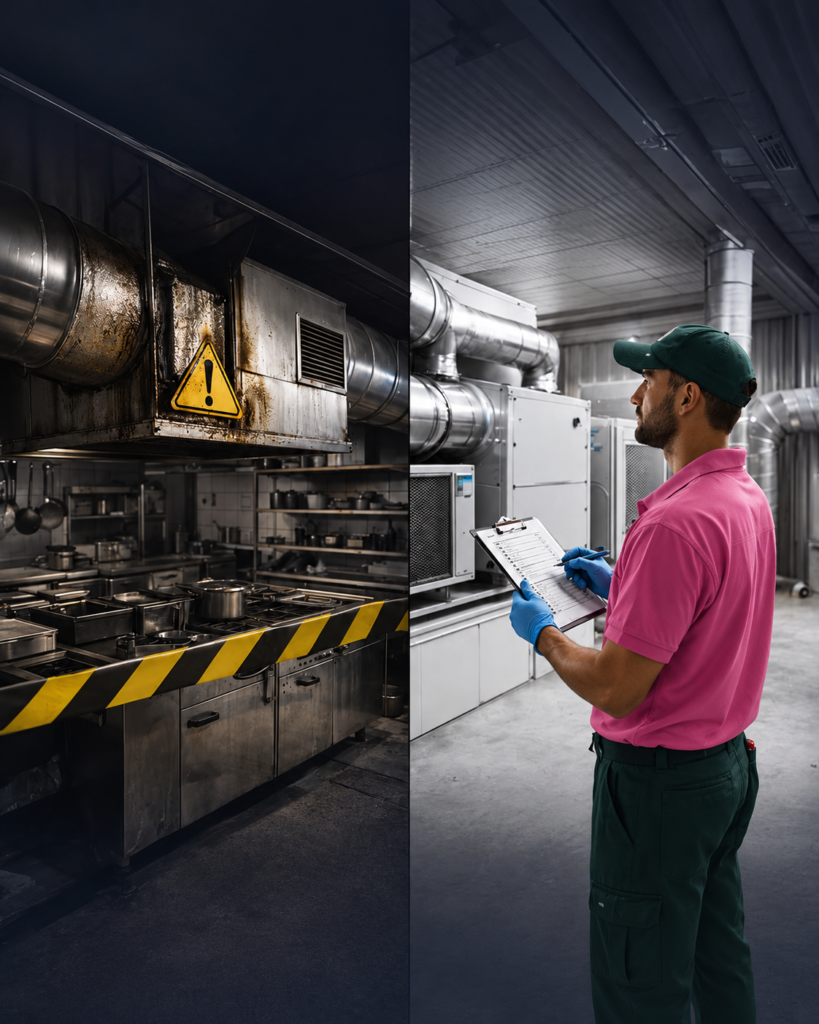
- Visual standards — Many facilities use before/after photos, checklists, or color-coded zones so cleanliness standards are visible and easy to audit.
A Practical 5S Cleaning Framework for Factories & Warehouses
Sort
- Remove unused tools, obsolete inventory, and scrap materials from work areas and walkways.
- Clear packaging waste and damaged pallets from warehouse aisles regularly, not just before audits.
Set in Order
- Label storage locations for tools, cleaning equipment, and materials.
- Mark floor zones (walkways, machine areas, storage) with paint or tape so cleaning and organization boundaries are visually obvious.
Shine
- Daily floor sweeping and spot cleaning in high-traffic and production zones.
- Weekly scrubbing and degreasing of floors near machinery.
- Monthly high-level dusting of beams, ducts, and overhead structures.
- Quarterly full-facility deep cleaning, including washrooms, canteens, and external loading areas.
Standardize
- Document cleaning schedules and assign clear ownership per zone.
- Create simple checklists that supervisors can use for daily walk-throughs.
Sustain
- Conduct periodic 5S audits with scoring, and share results with teams.
- Reinforce standards through training rather than one-time instructions.
Common Mistakes Indian Factories Make with 5S Cleaning
- Treating Shine as a pre-audit scramble instead of a sustained routine — this is the single most common failure point.
- No clear ownership — when cleaning responsibility isn’t assigned to specific people or zones, it gets deprioritized during busy production periods.
- Ignoring high-reach areas — floors get cleaned regularly, but overhead beams, ducting, and racking tops are often neglected until they become visibly dirty or flag an audit issue.
- No documentation — without checklists or logs, it’s difficult to prove consistent housekeeping standards during external audits.
Where Professional Cleaning Support Helps
In-house teams can usually manage daily Sort, Set in Order, and light Shine tasks. But the deeper, scheduled cleaning cycles — degreasing, high-level dusting, full-facility deep cleans — often need industrial-grade equipment and trained manpower that stretch internal housekeeping teams thin, especially in larger facilities.
This is where an external, ISO-certified cleaning partner fits naturally into a 5S system: handling the scheduled Shine cycles with documented processes, so your facility stays consistently audit-ready instead of relying on a last-minute cleanup before every inspection.
Pinkclean provides ISO-certified deep cleaning services for factories and warehouses across India, designed to integrate with existing 5S and housekeeping systems rather than replace them — supporting your Shine cycles with scheduled, documented, and equipment-backed cleaning.
Looking to build a sustainable 5S cleaning routine for your facility? Talk to Pinkclean about a customized cleaning schedule.
